
Mantle-Driven Environmental States during Supercontinent Assembly and Breakup

Abstract: How the formation and breakup of supercontinents drive environmental shifts remains a fundamental question, but piecemeal deep-time records prevent an answer based on observations. Here we present the first simulation of an Earth-like planet integrating geodynamics, climate, and surface processes to assess how solid Earth dynamics regulate environmental change….

Mantle-Driven Environmental States during Supercontinent Assembly and Breakup Read More »
Carbon Depletion of Ices by Diamond Precipitation in Sub-Neptune Exoplanets

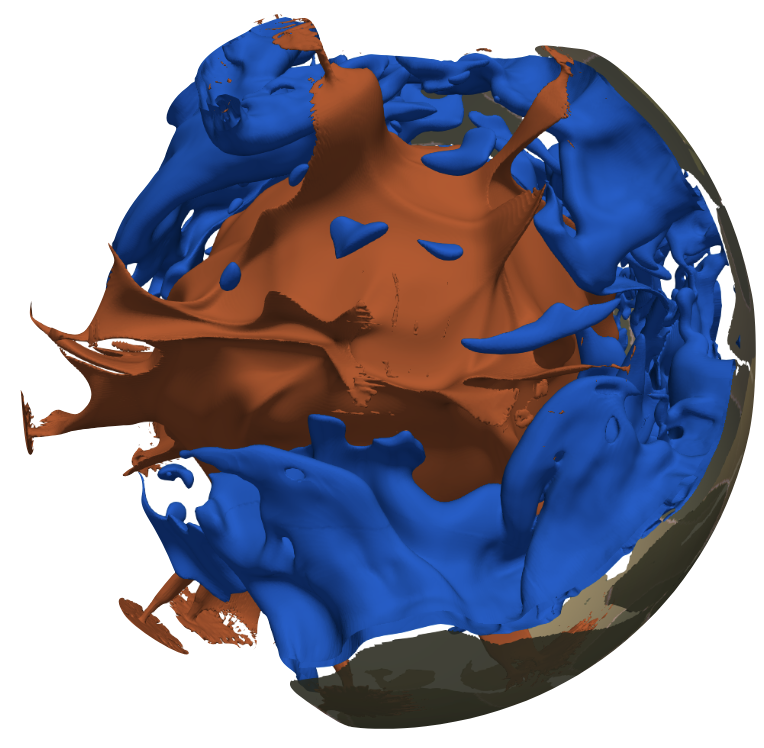
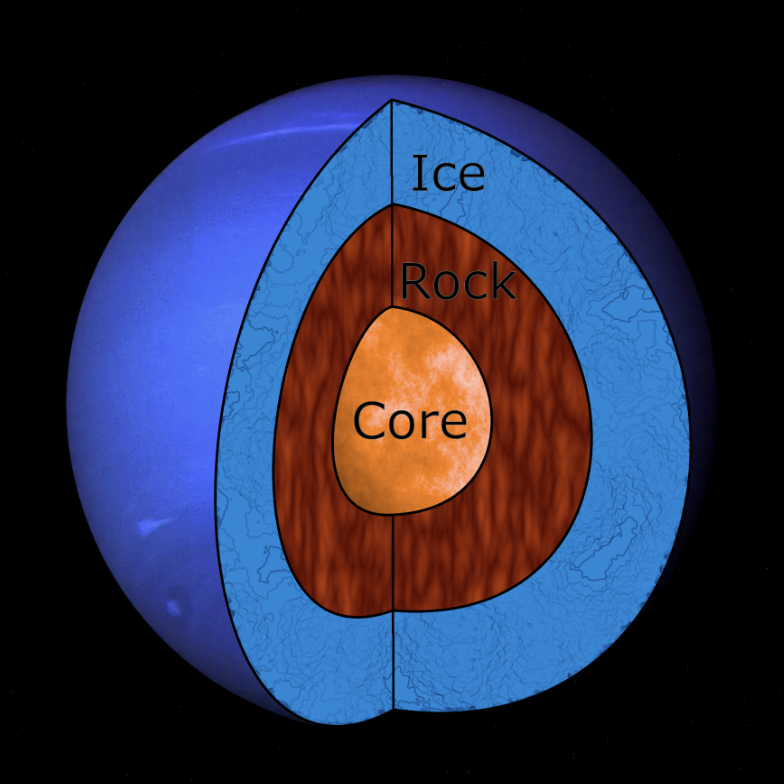
Abstract: Hydrocarbons are observed on the surfaces of many icy moons and planets. At high-pressure high-temperature conditions, such as occur in larger planets, they are known to dissociate to form diamond and hydrogen. Within our solar system Uranus and Neptune easily reach the requisite 10 GPa and 2000 K for…

Carbon Depletion of Ices by Diamond Precipitation in Sub-Neptune Exoplanets Read More »

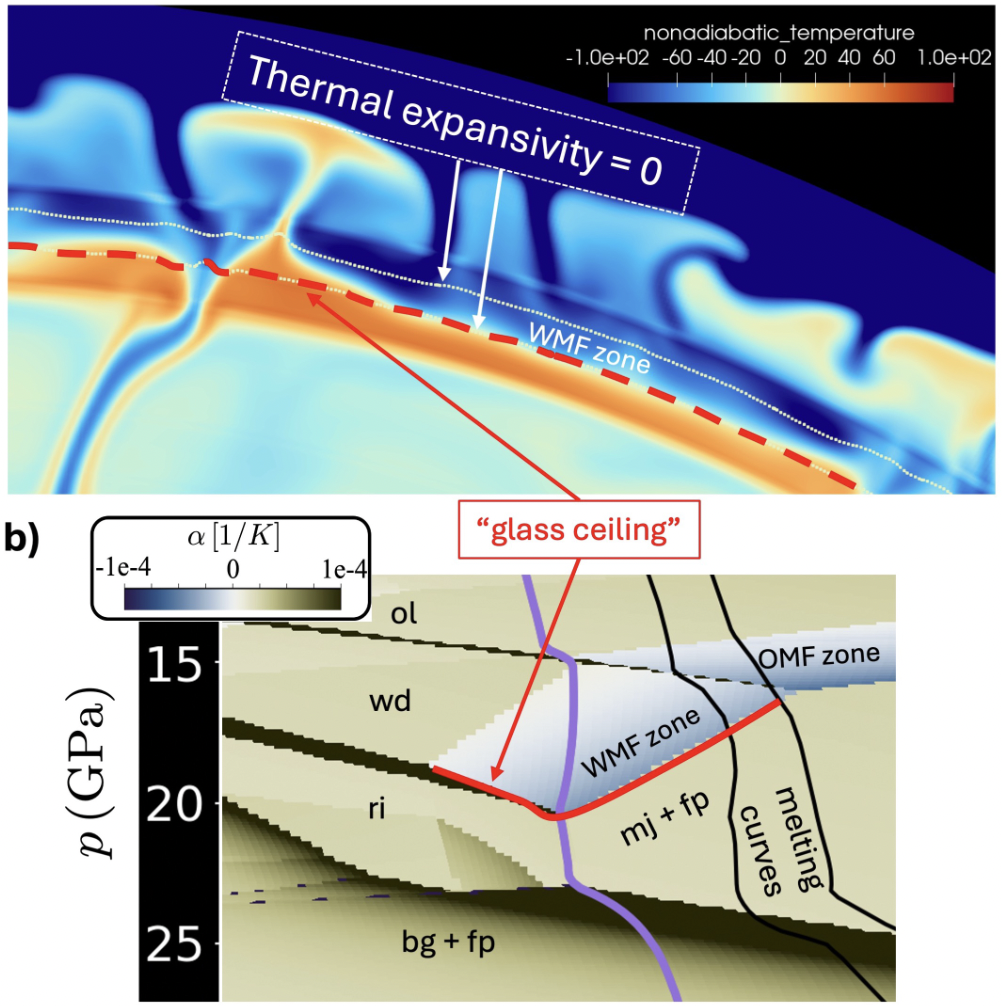
Heat flow scaling relationships for the glass-ceiling convective regime and implications for Venus

Abstract: Most rocky planets operate in a stagnant lid convective regime. They are characterized by the strongly temperature-dependent viscosity that locks the cold mantle silicates near the surface into a stiff layer, or lid, which does not participate in mantle convection. Stagnant lid planets have lower surface heat flows than…

Heat flow scaling relationships for the glass-ceiling convective regime and implications for Venus Read More »

CPO2Hill: An Efficient Parametrisation to Infer Anisotropic Viscous Behaviour Directly from Olivine Texture Parameters

Abstract: Anisotropic viscosity is likely prevalent within the upper mantle, but is usually disregarded in geodynamics models. On a crystal scale, olivine’s intrinsic properties are such that dislocation creep occurs over an order of magnitude more easily along olivine’s [100] symmetry axis than along its [001] axis. However, deforming olivine…

CPO2Hill: An Efficient Parametrisation to Infer Anisotropic Viscous Behaviour Directly from Olivine Texture Parameters Read More »

Crustal-Scale Signatures of Steady-State Thermal Inheritance: Insights from the South China Sea

Abstract: Long-lived lateral variations in radiogenic heat production create persistent thermal heterogeneities that shape continental lithosphere over geological timescales. We introduce a steady-state concept of thermal inheritance, linking these variations to crustal-scale strain localization and tectonic architecture.Using numerical models, we explore both crustal- and lithospheric-scale consequences of heterogeneous heat production….

Crustal-Scale Signatures of Steady-State Thermal Inheritance: Insights from the South China Sea Read More »

Lithospheric Mantle Density Anomalies Determined From Lithosphere Thickness and Dynamic Topography

Abstract: Chemical buoyancy within the lithosphere may be prevalent in certain depth regions. To constrain those depths, we follow an approach similar to Wang et al. (2023) and plot the difference between residual topography—where only crustal isostatic topography has been removed—and dynamic topography—where only sub-lithospheric density anomalies are considered—against lithosphere thickness….

Lithospheric Mantle Density Anomalies Determined From Lithosphere Thickness and Dynamic Topography Read More »

Geodynamica has just published its first article!

Geodynamica News icon

We are pleased to announce that Geodynamica has just published its first article! This article, by Steinberger, B. and Strobel, P., uses both dynamic topography and lithospheric thickness data in order to assess continental mantle lithospheric density. Congratulations to the authors for this work, and to the Geodynamica team members involved in this first manuscript’s

Geodynamica has just published its first article! Read More »

Geodynamica is recruiting its editorial, technical, and media & outreach teams!

Geodynamica Recruiting icon

Dear geodynamics community, We are looking for volunteers to complete the teams behind Geodynamica: a new community-driven Diamond Open Access Journal (free to read, free to publish) with a scope encompassing all things geodynamics-related, whether it be Earth or (exo)planet focused. Have a look at our website-in-the-making for the full scope. Specifically, we are looking

Geodynamica is recruiting its editorial, technical, and media & outreach teams! Read More »

Scroll to Top